
The Definitive Guide to Investing in African Mining Indaba 2026 (Part 3)
10. The Tech Stack of Mining 4.0: Where the Contracts Are
If you walk through the exhibition halls of Indaba 2026, you will notice a visual shift. The massive yellow dump trucks are still there, but they are now parked next to server racks and VR headsets.
For tech investors and software developers, the "Invisible Gold Rush" is underway. Mining houses are no longer just buying iron and steel; they are buying code, connectivity, and clarity. The market for Mining Software & Analytics in Africa has matured from "Pilot Projects" to "Enterprise Standard."
This section breaks down the 5 Layers of the 2026 Mining Tech Stack, identifying exactly where the gaps—and the money—are found.
Layer 1: The Backbone (Connectivity & Infrastructure)
Before you can run AI, you need a signal. In 2023, connectivity was the biggest barrier to digital adoption in Africa. In 2026, the barriers have fallen, but new challenges have emerged.
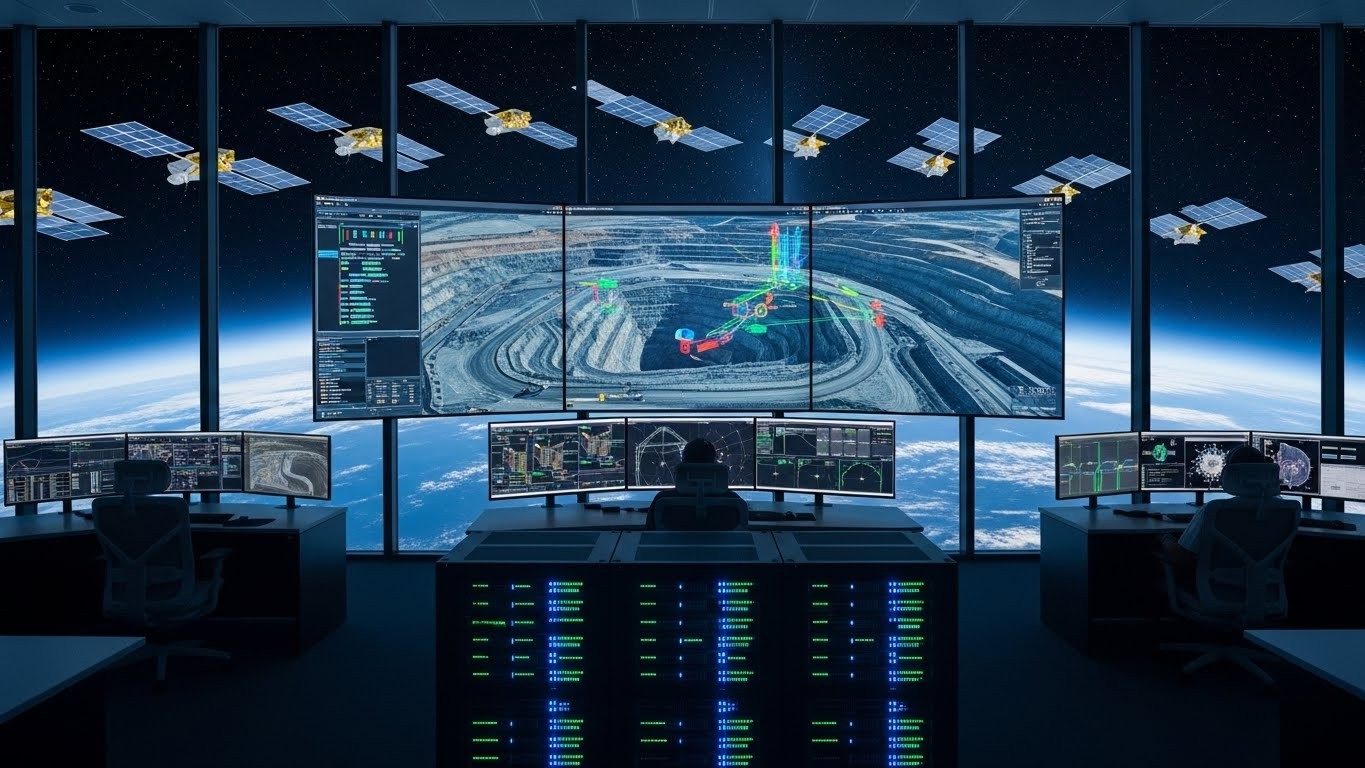
10.1 The LEO Satellite Revolution (OneWeb) Low Earth Orbit (LEO) satellites have effectively solved the "Remote Connectivity" problem.
- The Shift: Mines in the DRC, rural Zambia, and the Northern Cape no longer rely on expensive, high-latency VSAT links. They have gigabit speeds with low latency (under 50ms).
- The Opportunity: The money isn't in selling the dish; it's in the "Managed Service." Mines don't want to manage ISPs. They want a partner who guarantees 99.99% uptime by bonding Fiber, and 5G into a single fail-safe pipe (SD-WAN).
10.2 Private 5G vs. Wi-Fi 6 For open-pit mines (like Mogalakwena or Sishen), Wi-Fi is dead. It can’t handle the hand-off speeds required by autonomous trucks moving at 40km/h.
- The Standard: Private 5G Networks are now the gold standard for autonomous haulage.
- The Contract: Telcos (MTN, Vodacom) are fighting for these contracts, but there is a niche for "Network Architects"—consultants who design these private spectrum networks specifically to handle the interference of a magnetic, metallic mine environment.
Layer 2: The "Eyes and Ears" (IoT & Sensors)
Once connected, the mine needs to generate data. The era of "Manual Logging" is ending. If it moves, vibrates, or consumes energy, it has a sensor.
10.3 The "Smart Rock" Technology We are seeing sensors being thrown into the blast holes.
- What it does: These rugged sensors move with the ore through the blast, the truck, and the crusher, tracking the journey of the rock.
- The Value: It tells the plant manager exactly what grade of ore is coming down the belt before it arrives, allowing the plant to auto-adjust reagents. This is "Feed Forward Control."
10.4 Wearables: The "Connected Worker" Paradox Technologically, we can track every heartbeat of a miner. Politically, it’s a minefield.
- The 2026 Compromise: Unions have accepted wearables only for Safety, not for Productivity.
- The Winning Tech: "Smart Vests" that detect:
- Proximity: Vibrating if a forklift is too close.
- Heat Stress: Alerting the shift boss if a worker’s core temp rises dangerously deep underground.
- Man-Down: Instant GPS location if a fall is detected.
Layer 3: The "Brain" (Data & Analytics)
This is the most profitable layer for software developers. Mines are drowning in data but starving for insights.
10.5 The "Data Lake" Cleanup Crew Most mines have 10 years of data sitting in messy CSV files, Scada logs, and SAP archives.
- The Service: "Data Harmonization." Before you can use AI, you need clean data. Companies that offer to "clean and structure" historical data are writing their own cheques.
10.6 The Digital Twin In 2026, a "Digital Twin" is not just a 3D model; it is a live operational dashboard.
- The Use Case: A Mine Manager in Sandton puts on a headset (or uses an iPad) to walk through the processing plant in Rustenburg in real-time. They can see live flow rates, tank levels, and motor temperatures overlayed on the screen (Augmented Reality).
10.7 Predictive Maintenance (The "Cash Cow")
- The Pain: A ball mill gearbox failure costs R10 million a day in lost production.
- The Solution: Vibration analysis algorithms that predict failure 2 weeks in advance.
- The Gap: Most "Generic AI" fails here because it doesn't understand mining physics. The market needs "Physics-Informed Neural Networks"—AI that knows the difference between a rock impact and a bearing fault.
Layer 4: The Application Layer (The "Micro-SaaS" Opportunity)
This is your sweet spot. The era of the "Monolith ERP" (one giant software to rule them all) is fading. Mines are adopting a "Best of Breed" approach—using SAP for finance but buying specialized "Micro-SaaS" tools for operations.
10.8 The "User Experience" (UX) Revolution Miners are young. They grew up with TikTok and Uber. They refuse to use clunky, grey Windows 95-style software.
- The Demand: Mobile-first, swipe-friendly, dark-mode apps that look like consumer tech but work like industrial tech.
10.9 Three Specific "Micro-SaaS" Niches for 2026
A. The "Logistics Slot" Booker (Uber for Tippers)
- Context: The Transnet crisis has put thousands of trucks on the road.
- The App: A cloud-based booking system where trucking companies book a 30-minute delivery slot.
- The Win: Eliminates the 10km queue outside the mine gate. Syncs with the weighbridge.
- Buyer: Logistics Superintendents.
B. The "SLP & Community" Tracker
- Context: Social Labour Plans (SLP) are legally binding. Missing a target risks the mining license.
- The App: A project management dashboard specifically for community projects. Geotagged photos of the school being built. Real-time budget tracking vs. "Promised Spend."
- Buyer: The Transformation / Sustainable Development Manager.
C. The "Digital Permit to Work"
- Context: Paper permits get lost and muddy.
- The App: A tablet-based system where the rigger, electrician, and safety officer all sign the permit digitally on the glass. It auto-locks if credentials (like a medical certificate) are expired.
- Buyer: The SHEQ (Safety) Manager.
Layer 5: The Shield (Cybersecurity & Data Sovereignty)
As mines come online, they become targets.
10.10 OT Security (Operational Technology) Hackers don't want to steal emails anymore; they want to hold the Plant hostage.
- The Threat: Ransomware that locks the PLCs (Programmable Logic Controllers) controlling the ventilation fans or the hoist.
- The Opportunity: There is a massive shortage of cybersecurity experts who understand SCADA and ICS (Industrial Control Systems). Traditional IT security doesn't work here.
10.11 Data Sovereignty Laws African governments (especially Tanzania, DRC, and South Africa) are passing laws requiring "Strategic Data" to be stored within the country's borders.
- The Impact: You cannot just host everything on AWS US-East. You need local data centers or "On-Premise" cloud stacks.
11. How to Sell Tech to a Miner in 2026
Selling software to a mine is not like selling to a bank. The sales cycle is different, the people are different, and the triggers are different.
11.1 The "Pilot Purgatory" Trap
Mines love "Pilots" (free trials). They will let you run a pilot for 2 years and never pay you.
- The Strategy: Never do a free pilot. Charge for the "Proof of Concept" (POC). If they aren't willing to pay R50k for a POC, they will never pay R5m for the contract.
11.2 Who is the Buyer?
- The CIO (Chief Information Officer): Often a gatekeeper. They care about "Integration" and "Security." They will say No, but they rarely say Yes.
- The GM (General Manager): The King. If the GM wants it, the CIO has to make it happen. Sell the outcome (e.g., "I will reduce truck queues by 50%") to the GM.
- The Superintendent: The user. Win their heart with great UX, and they will fight for you internally.
11.3 The "Offline First" Requirement
If your pitch involves "Real-time Cloud Sync," you will be laughed out of the room.
- Reality: Underground Wi-Fi breaks. 4G has dead zones.
- Requirement: Your software must work 100% perfectly while disconnected for 8 hours, and sync seamlessly when the connection returns.
12. The Future: What comes after 2026?
Looking briefly at the horizon (2030+), we see the "Post-Human" mine.
- Swarm Robotics: Small, autonomous robots mining narrow reefs (like Platinum) that are too dangerous for humans.
- Bio-Mining: Using bacteria to leach metals from low-grade waste dumps (already happening, but scaling up).
- The Circular Mine: Mines becoming "Waste Processing Facilities," re-mining their own tailings dams to recover lost minerals and clean up the environment.
Experience the Future Today
Don't just read about the future of mining operations—interact with it. Below is a live simulation of our Operational Intelligence Dashboard, designed to give GMs instant clarity on production, safety, and costs.
Try asking: "What is the status?" or "Cost saving?"
[mining-os.appdesignhub.com/dashboard](https://mining-os.appdesignhub.com/dashboard)Mining OS Online. Connected to Mill #4, Logistics Gate, and Shaft 1. How can I assist?