
Solving Remote Mining Email Challenges with GCP 'Cloud-at-the-Edge
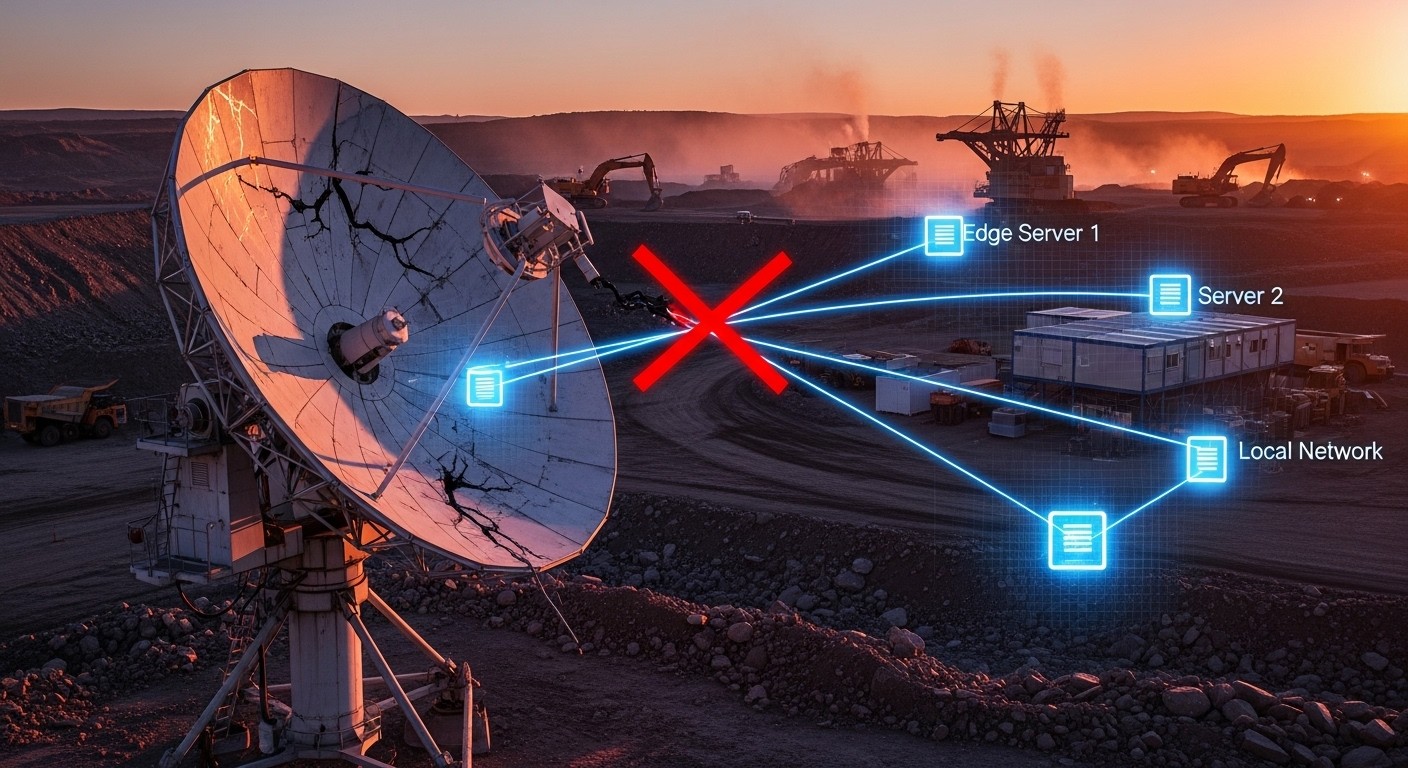
When we conduct an IT Consultation for the mining industry, the most critical challenge is always connectivity. In extremely remote, "off-grid" locations, satellite latency is high and network "blackouts" are frequent.
When the satellite link goes down, traditional Professional Email Setup environments—whether based on legacy Outlook servers or standard cloud environments—grind to a halt. If a shift boss cannot email engineering about a critical fault because the internet dropped, production stops.
To solve this, our Email Solutions team shifts the focus from traditional on-premise hardware to a "Cloud-at-the-Edge" architecture using the Google Cloud Platform (GCP) ecosystem.
We don't just rely on a direct connection to a Google data center; we bring the Google data center to the mine.
The GCP IT Solution: Distributed Edge Architecture
1. Google Distributed Cloud (GDC) Edge Instead of a standard, high-maintenance local server, we deploy Google Distributed Cloud Edge hardware directly at the mine site. How it works: This is a fully managed appliance that runs Google’s software stack locally. Email Impact: You host a local mail relay or a containerized Email instance (using Google Kubernetes Engine Anthos) on this hardware. Local workers can continue to email each other instantly without the data ever needing to leave the site's local area network (LAN), even if the satellite backhaul drops.
2. Asynchronous Sync via Pub/Sub & IoT Core When the satellite connection is active, the local site needs to "burst" its data to the global Google Workspace. The Tech: We use Google Cloud Pub/Sub to queue outgoing emails and data reports. The Benefit: If the connection drops, Pub/Sub stores the messages in a secure "buffer." The moment the satellite link re-establishes, GCP automatically flushes the queue, sending all pending external emails at once without the user ever having to click "Resend."
3. Google Workspace "Offline Mode" + Local Cache For the end-user (the miner or site manager), we configure their workspace with specific Chrome policies. The Tech: Enabling Gmail Offline via managed Google Chrome profiles. The Benefit: This allows users to read, respond to, and search their mail while completely disconnected. The GDC Edge hardware acts as a local "caching proxy," speeding up the synchronization process once the "pipe" to the world opens back up.
Comparison: Traditional Remote IT vs. GCP Edge
| Feature | Traditional Remote IT | GCP Distributed Cloud Solution |
|---|---|---|
| Connectivity | Synchronous (needs constant link) | Asynchronous (handles "jitter" & drops) |
| Hardware | Independent local servers (high maintenance) | Fully managed Google Edge (Zero-touch ops) |
| Data Flow | High-latency satellite hops for every click | Local-first processing; batch-syncing to Cloud |
| Recovery | Manual intervention if sync fails | Automated healing via GKE and Pub/Sub |
How This Solves Your Core Pain Points
- Zero Latency Internally: Internal site emails move at LAN speeds (1Gbps+) rather than waiting for a 600ms satellite round-trip.
- Absolute Reliability: The "Store and Forward" nature of GCP’s messaging services ensures no communication is ever "lost" during a storm or technical outage; it is simply delayed until the link returns.
- Enterprise Security: Even at the edge, you retain BeyondCorp (Google’s Zero Trust model), ensuring that only authorized tablets and laptops on the mine site can access the local mail cache.
Upgrade Your Remote Infrastructure
If your remote site is struggling with communication blackouts, a standard Migration to the cloud isn't enough—you need an architecture built for the edge.
Ready to bulletproof your site's communications? Book a consultation with our engineers today to discuss a custom GCP Email Migration strategy for your remote operations.